

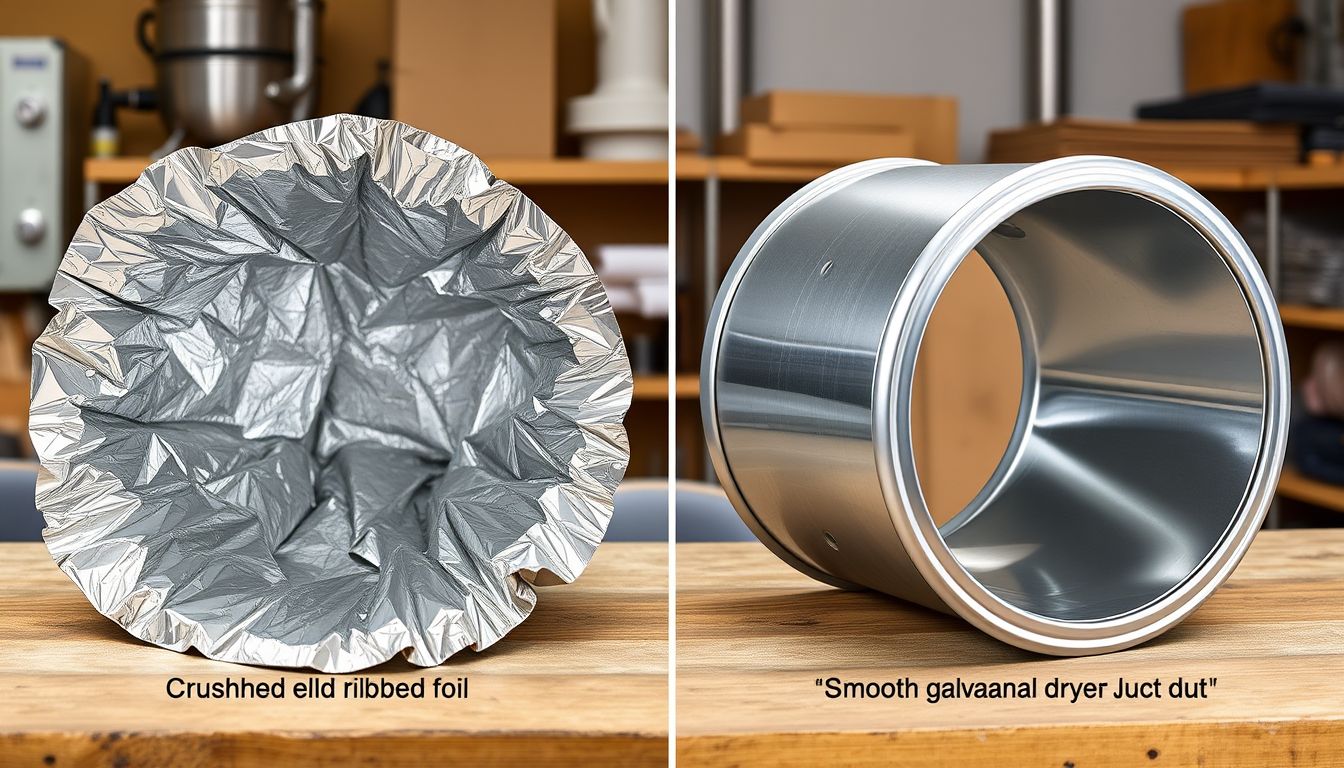
Short answer: rigid or semi-rigid metal is the safer choice for a dryer vent. Thin ribbed foil and plastic (vinyl) ducts crush easily, trap more lint in their ridges and are not suited to the heat a dryer produces. Many dryer manufacturers specify metal duct in their installation instructions, so check your dryer manual.
The four common types
Plastic or vinyl duct
White, flexible and cheap. It is the least suitable choice for a clothes dryer. It sags, crushes and traps lint, and it is not designed for high heat.
Thin foil flexible duct
Silver, accordion-style and easy to install. The ribs catch lint, it crushes easily behind the dryer, and it tears. If you have it, consider replacing it.
Semi-rigid aluminum duct
Flexible enough to connect the dryer to the wall, but much sturdier than foil. A good choice for the short connector between the dryer and the wall outlet.
Rigid metal duct
Smooth-walled sheet metal. Lint has less to cling to, it does not crush, and it handles heat well. The best choice for runs inside walls, ceilings and attics.
Why the inside surface matters
Lint sticks to rough, ribbed surfaces. Every ridge in a foil duct is a place for lint to build up. Smooth metal lets air and lint move through, so the vent stays clear longer and the dryer works less.
Installation tips
- Keep the connector as short and straight as possible.
- Do not crush the duct when you push the dryer back against the wall.
- Use foil tape or clamps on joints, not screws, which poke into the duct and catch lint.
- Make sure the outside hood has a flap that opens freely, not a screen that traps lint.
- Follow your dryer manufacturer’s installation instructions and local codes.
How to check what is behind your dryer
Turn the dryer off and unplug it, or switch off the gas supply valve for a gas dryer, then slide it forward slowly. Look at the connector between the dryer and the wall. White vinyl or thin foil that crinkles when you squeeze it is the type most manufacturers and fire safety groups advise against. Semi-rigid aluminum holds its shape and has a smoother inside. Rigid metal pipe is the best choice for the run inside walls and ceilings. While the dryer is out, check that the connector is not crushed, sagging or full of lint.
Signs your current duct needs replacing
- The connector is plastic or thin foil.
- It has been crushed flat behind the dryer.
- It has tears, holes or loose joints held with tape that has peeled.
- It sags into a low loop where lint and moisture collect.
- It is much longer than needed and coiled behind the machine.
Why the right duct still needs cleaning
Switching to rigid or semi-rigid metal lowers the risk and helps air move, but it does not stop lint completely. Lint still settles at elbows, along long runs and at the outside hood, and moisture in cold weather makes it stick. Plan on regular cleaning whatever type you have. When a duct is replaced, it is a good moment to clean the rest of the run to the outside so the new section is not connected to an old clog.
Get your dryer vent checked
UltiClean cleans the full dryer vent run and checks the connector and the outside hood. Call (647) 676-0576 or read about dryer vent cleaning and dryer vent fire safety.
Foil and Metal Dryer Duct FAQs
Can I keep my foil duct if I clean it often?
Cleaning helps, but foil keeps trapping lint in its ribs and crushes easily. Replacing it with semi-rigid or rigid metal is the better long-term fix.
Can you replace my dryer duct?
We clean dryer vents and will point out a damaged or unsuitable connector. Ask when you book.
How long can a dryer vent be?
It depends on the dryer model and the number of bends. Your dryer manual lists the maximum length. Long runs clog faster.
Why does my vent have a screen on the outside?
Screens keep pests out but trap lint. A flap or louvred hood is usually a better choice for dryer vents.
How often should I clean a metal vent?
At least once a year. Read how often to clean your dryer vent.
UltiClean cleans dryer vents across Richmond Hill, Aurora, Newmarket, Vaughan and Toronto. See dryer vent cleaning or call (647) 676-0576.
Ready for a deep clean?
Carpets, air ducts, dryer vents and tile and grout across Richmond Hill, Aurora, Newmarket, Vaughan and Toronto.

Written by
Carpet, air duct and tile cleaning specialist at UltiClean
Seyedamir (Amir) Vafamand has 12 years of hands-on experience cleaning carpets, upholstery, air ducts, dryer vents and tile and grout in homes across Toronto, Vaughan, Richmond Hill, Aurora and Newmarket. This guide is based on that work.
- 12 years of experience
- 1,100+ jobs completed on Jiffy
- 98% approval rating
- $2M liability insurance
UltiClean Air Duct & Carpet Cleaning Services
54 Limeridge St
Aurora, ON L4G 7X9
(647) 676-0576, open 24 hours, 7 days a week